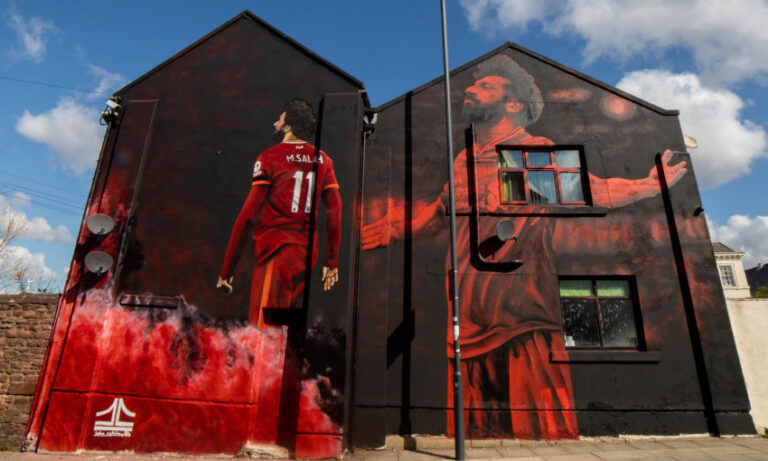
Trophies, stats alongside the Liverpool greats & the emergence of player power in the social media age. This is the bitter & fading end to Mo Salah’s career at Liverpool after his comments mid-season.
When Cristiano Ronaldo delivered his scathing comments in an interview with Piers Morgan, criticising the Ten Hag regime and the club setup behind the scenes, the world stood up to take notice. But for Ronaldo, it meant being shipped out to Saudi Arabia.
It was no surprise that Piers Morgan once again jumped at the chance of interviewing Salah, after writing a tweet tagging the Liverpool legend, just hours after Salah’s controversial interview after Liverpool’s 3–3 draw to Leeds mid-season.
In this whirlwind age of social media, things become bigger than they are & seem. Player power has taken a huge front seat in the modern era of football. These are players that command armies of vast global fan bases, unprecedented social media followers and clout & this has unduly leaked onto the pitch.
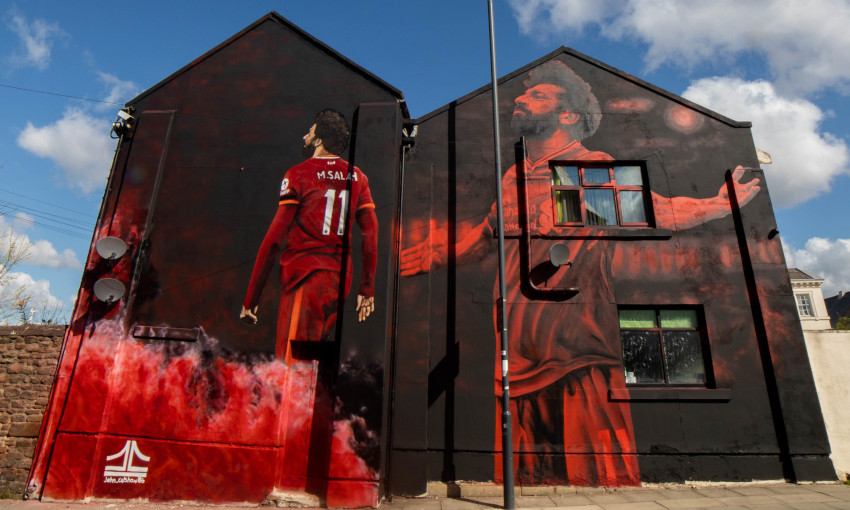
Mo Salah is arguably a global icon commanding a fervent fan base globally, in Africa, his native Egypt, and around the world, not just in the heart of Liverpool.
With Jamie Carragher and pundits alike discussing the game and providing their criticism and analysis, whether it’s flawed, cyclic or even constantly changing at the drop of a hat with comments from the past quickly forgotten for the latest ones, and with global fans taking to Twitter(X) to discuss & dissect events in discourse; the butterfly effect of just a small interview now has atomic bomb scale repercussions.
And here sits Mo Salah: Arguably Liverpool’s greatest player of the modern era since the likes of Steven Gerrard. A poster boy for the club & a player who has delivered numbers far beyond what was expected of him, etching him in the lights amongst the Liverpool greats at Anfield.
Salah’s last season was impeccable. His numbers: 29 goals, 18 assists, and an xG of 27.7 propelled a well-oiled Liverpool side to domestic dominance and glory.
But this is the end of the road for Salah. Last season was his peak, and the decline began this season.
Putting it on face value, Salah is 33. Most players at the age of 33 are already declining & have to contend with the fact that their career at the top level is going to steadily fade.
It’s not just numbers & stats, physically, at 33, you just don’t have the legs and the physical ability to compete at the top level. Of course, there are outliers, and there are players known for their longevity, with the likes of Luka Modric and Zlatan Ibrahimovic playing in Europe until 40 (Let’s not talk about Ronaldo since he’s gone to Saudi Arabia).
Nothing is harder for a footballer to accept than the end of his/her career. It’s the hardest part of playing the game and giving so much of your life to it in what is roughly a fifteen-year average haul after your teens. Nothing is harder, and even the greats have had to contend with it.
But if this was the old guard, the likes of Gerrard or Scholes or Lampard for their respective clubs, they took their physical decline in their stride and left their clubs gracefully, ushering in the respective new era & moving abroad, whether to the MLS or elsewhere to continue the fading embers of their careers before retirement.
Is Mo Salah bigger than Steven Gerrard?
That’s a very subjective question, and of course, Salah has won more titles and brought more success domestically and in Europe than Gerrard, especially domestically, with Gerrard retiring without a Premier League honour.
But it begs the question, if Gerrard could leave Anfield gracefully, couldn’t Salah have done the same?
Of course, football fans forget pretty fast; such is the nature of the sport.
Salah’s comments, at a time when Liverpool were struggling as a club and had been under the cosh, just came at the wrong time & quite frankly, was a bad case of player power in the modern age coming to the fore of the game that has a certain structure & coherence behind it.
In today’s times, you can’t just make comments like that without a huge furore and social media outburst and outrage, not just from Liverpool fans but fans of the game worldwide.
In that sense, his interview was just bad taste & bad timing, and perhaps was Salah & his representatives, agents, PR reps, etc., trying to milk out the best they could from the club before Salah departed: a new contract(at the time), or a big money move elsewhere for much higher wages.
They were aware that if Salah doesn’t play, his market value drops. It was as black and white as that. His outburst in the media mid-season was certainly mooted by the people behind the scenes in the Salah camp, urging him to make those comments. They have vested interests in Salah and needed to ensure he gets the maximum amount possible, whether that was via a new deal or a move away, and that they retain their slices of the pie.
The signs were there. Salah did this, although to much lesser effect, last season. But Liverpool were running away with the league, Salah was firing, and it seemed like the best time to make his move to convince the club to put pen to paper on a new contract.
But in forcing the “it’s them, not me,” narrative, and playing on the sentiments of the club’s fans towards him, Salah was increasingly dividing & polarising the fan base & putting more pressure on his manager, Arne Slot, and his teammates at a time when solidarity was needed.
Salah’s numbers this season have been dwindling, and it’s perhaps evident that the decline began. But he isolated himself from his teammates and manager, just compounding the issues at Anfield with his comments mid-season.
At the age of 33, even if you’re Mo Salah, you should perhaps be ready to see your minutes managed. So, not starting in three games, at the time, was perhaps the manager trying to manage him to get the best out of him.
Of course, Liverpool have splurged big money in the summer & the manager has to look ahead & look to integrate his new recruits into his system: Wirtz, Isak, Ekitike, and the likes.
And in truth, Slot had to look ahead. He had to look beyond Salah. He had to figure out how to get the best out of his signings.
And Salah should’ve, in all due respect, understood that.
Not react with a player-power flex at a time when the club and its fans were genuinely reeling.
The questions are aplenty:
Where do Liverpool go from here?
Can this season be salvaged with a top-four finish & a long Champions League run?
Who should Liverpool look to replace Salah long-term?
Is this the bitter and maligned end of the road for Mo Salah as he bows out?
There are a lot of questions bubbling up from under the surface.
Football fans forget pretty easily.
But Salah is 33 and fading, and his interview sparked the fire of a controversial end to a staggering, trophy-laden & record-breaking Liverpool career.
But as we saw, even with Cristiano Ronaldo, arguably one of the greatest the game has ever seen & bigger than Salah in terms of player-power and clout: Ronaldo was discarded and shipped away to Saudi Arabian sands, elucidating that nobody is bigger than the club, its structure, the fans & the very game itself.
So now it comes full circle as Salah will be duly shipped to, where else, but Saudi Arabia as well. Salah commands a huge fan base in the Arab part of the world, and they would celebrate it as his homecoming of sorts.
And that’s what will contrive to happen by the end of this season.
His interview & now what has followed could arguably taint Salah’s legacy at the club forever.
Liverpool and Salah will now eventually & inevitably part ways, and it’ll perhaps be a bitter end to an otherwise flawless career.
Salah will perhaps bow out without the grace & respect that he could’ve left with; the likes that Liverpool legends before him gracefully & respectfully ended their careers at the club with, perhaps not the entire fan base, but to those who put all his comments in recent times under the microscope.
But it serves as a due reminder that, even in today’s player-power modelled, modern tech & social media-infused delirium, nobody is bigger than the club & the game.
About the Author